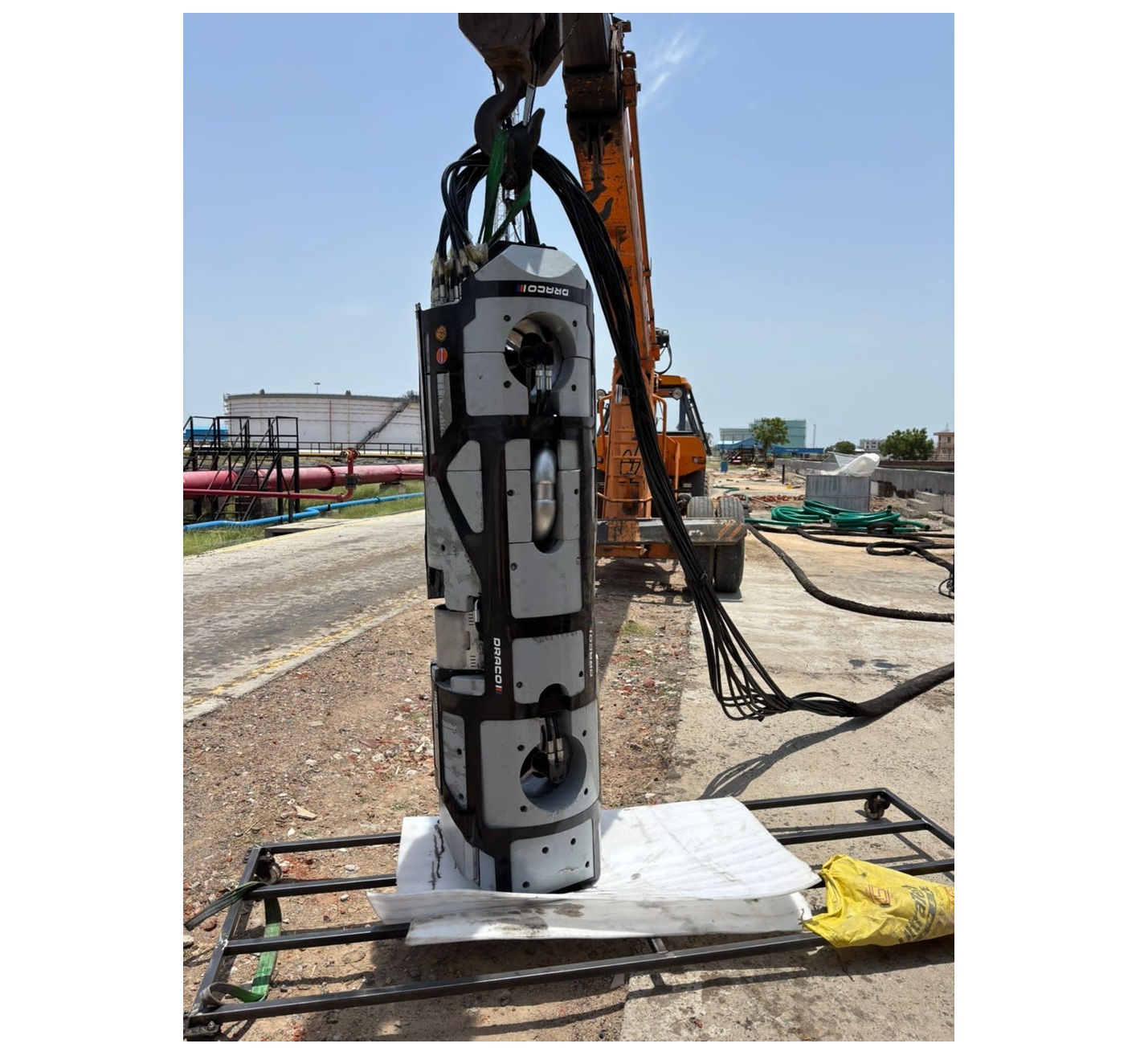
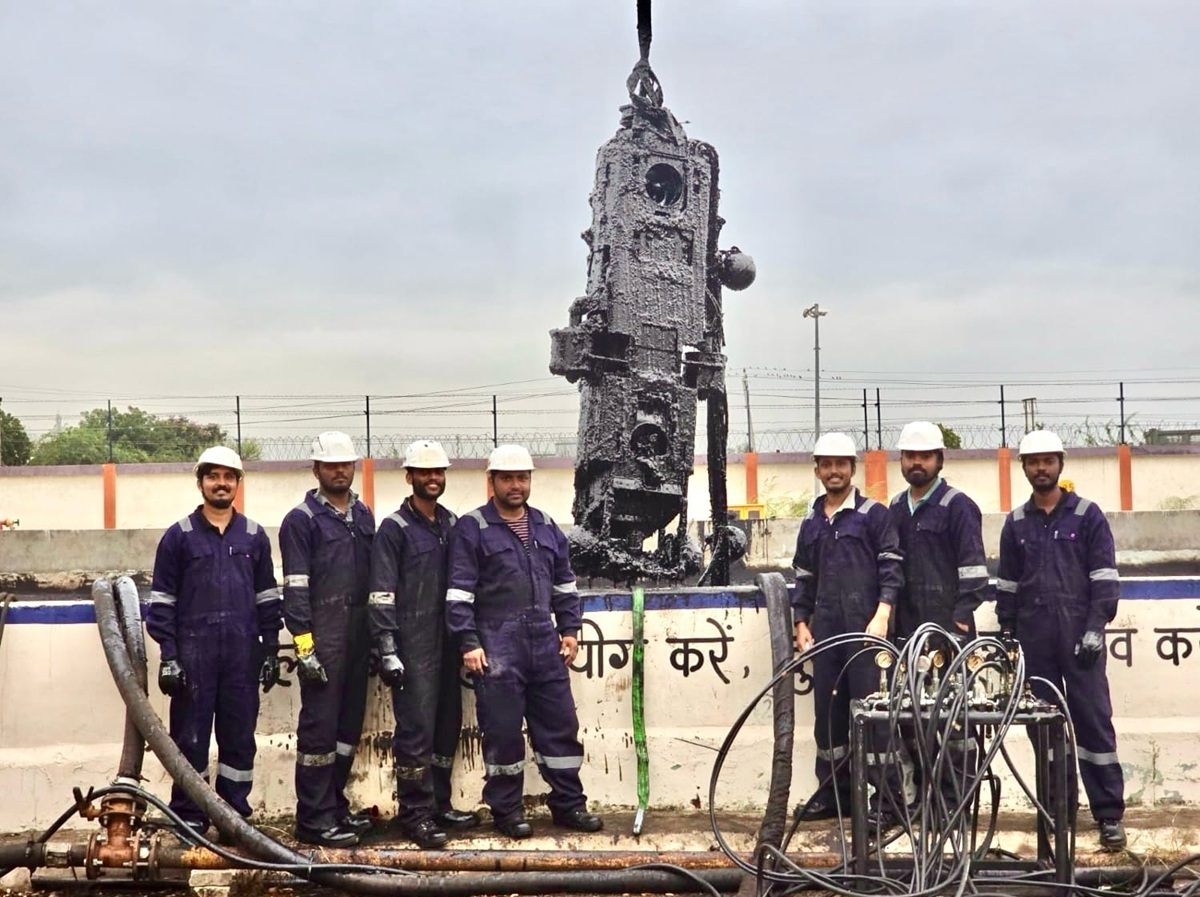
DRACO — Robotic Tank Cleaning System
In-service sludge removal from crude oil storage tanks in hazardous environments.
Crude oil storage tank maintenance in active oil & gas facilities — enabling in-service sludge removal without tank shutdown while minimising human entry into hazardous confined environments.
- Designed the piston pump subsystem for sludge mobilisation and pumping
- Developed hydraulic circuit architecture and selected components suitable for operation in hazardous environments
- Performed hydraulic calculations — flow estimation, pressure losses, and system performance analysis
- Conducted structural analysis to support subsystem design decisions
- Implemented inductive proximity sensor-based position sensing within hydraulic cylinder design and control logic for multi-cylinder synchronisation
- Contributed to system-level engineering decisions across hydraulics, structure, and actuation subsystems
- Performed engineering risk assessments — ignition hazard analysis, DFMEA, and Job Safety Analysis
- Coordinated engineering activities across design, fabrication, and testing phases
- Supported prototype build, integration, and iterative testing
- Took technical ownership of engineering activities during field validation phase, coordinating design, testing, and deployment efforts
- Supported engineering decisions during system verification and field deployment
The system was developed to operate inside oil storage tanks with high sludge accumulation, requiring reliable material handling under constrained and hazardous conditions. The primary challenge was achieving effective sludge mobilisation and extraction while maintaining safe and stable operation.
Hydraulic actuation was selected for its high power density and suitability for oil-contaminated environments. The system design involved defining circuit architecture, component selection, and ensuring stable performance under varying load conditions.
Structural design focused on durability and resistance to harsh operating conditions, including exposure to oil, sludge, and mechanical loads, while ensuring manufacturability and reliability.
The system utilised hydraulics for actuation due to the requirement for high force output and reliable operation in oil-contaminated environments. Hydraulic architecture was developed considering load conditions, flow requirements, and controllability within confined spaces.
The design involved defining circuit layout, selecting valves and actuators, and ensuring stable system behaviour under varying operational conditions, with focus on maintaining consistent flow and pressure characteristics for sludge handling.
Sensor-based feedback was integrated into the hydraulic system to support controlled actuation, including position sensing for coordinated operation of multiple cylinders. System behaviour was evaluated through calculations and iterative testing, improving synchronisation accuracy and control reliability.
The system underwent iterative validation through controlled testing and field trials to evaluate performance under realistic operating conditions. Custom test setups were used to simulate sludge behaviour and assess system response.
Testing focused on verifying hydraulic performance, structural reliability, and operational stability. Feedback from testing was used to refine design, improve durability, and ensure consistent system behaviour.